
UV DTF stickers · cold transfers for hard surfaces
UV DTF stickers in Istanbul for mugs, flasks and other hard surfaces
A UV DTF sticker is a full-colour transfer printed on film with UV-cured ink and pressed onto a hard surface without heat; it is also called a cold transfer sticker or cold DTF. nakis.online makes UV DTF stickers up to A3 in its Istanbul workshop for mugs, flasks, pens, glass, metal and plastic, from 10 pieces.
Last updated:
Key facts
- Who it suits
- Companies preparing promotional items; brands and workshops labelling their own products
- Largest size
- Up to A3 (29.7 × 42 cm)
- Minimum order
- 10 pieces
- Price depends on
- Sticker size, quantity and how you order
- Shipping
- Shipping from Istanbul across Türkiye and abroad
- Languages
- Turkish, English, German, Arabic, Russian
What is a UV DTF sticker, and how is it made?
UV DTF takes its name from DTF but does a different job: the design goes not onto fabric but onto a hard surface such as a mug or a glass bottle. The ink is cured by UV light rather than heat, and the sticker needs no press to hold. That is why the trade also calls it a cold DTF sticker, a cold transfer sticker or a crystal label, and why buyers look for it as UV DTF transfers or UV DTF labels.
There is no paper or clear margin around a finished sticker: once the film is peeled off, the gaps between the letters stay empty, and the design looks as if it had been printed directly on the product. It sits slightly raised on the surface, and a varnish layer gives it its gloss.
The sticker is made between two films, and the second one is removed at the very end:
- Printing: the design is printed with UV ink onto the adhesive-coated A film; a white layer can go behind the colours and a gloss varnish on top.
- Curing: the ink hardens under UV light during printing, so there is no drying time.
- Laminating: the B film is pressed onto the printed side, and the sticker sits between the two films, ready for use.
- Applying: the A film is lifted, the sticker is pressed onto the surface, and when the B film is peeled off only the design stays.
| Aspect | UV DTF sticker | Ordinary adhesive label | DTF (fabric) |
|---|---|---|---|
| Where it goes | Hard, smooth surface | Paper, card or a flat surface | Textiles such as T-shirts, bags and caps |
| Heat and press | Not needed; applied by pressing | Not needed | Heat press required |
| Carrier | The film is peeled off; only the design stays | Stays on with the design | The film is peeled off after pressing |
| Edge | The design’s own edge | Often a white or clear margin | The design’s own edge |
| Feel | Slightly raised and glossy | Flat | A thin, flexible layer on the fabric |
Which surfaces can take a UV DTF sticker?
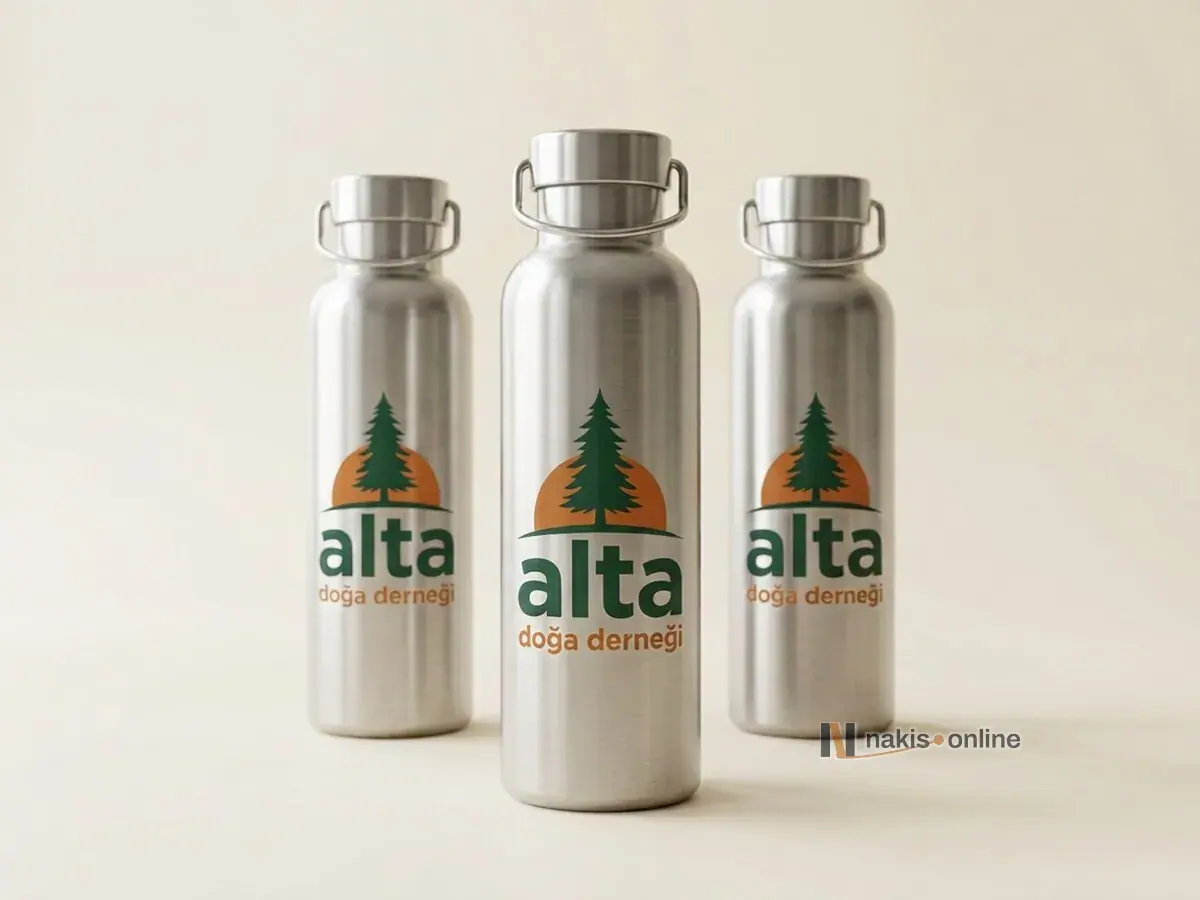
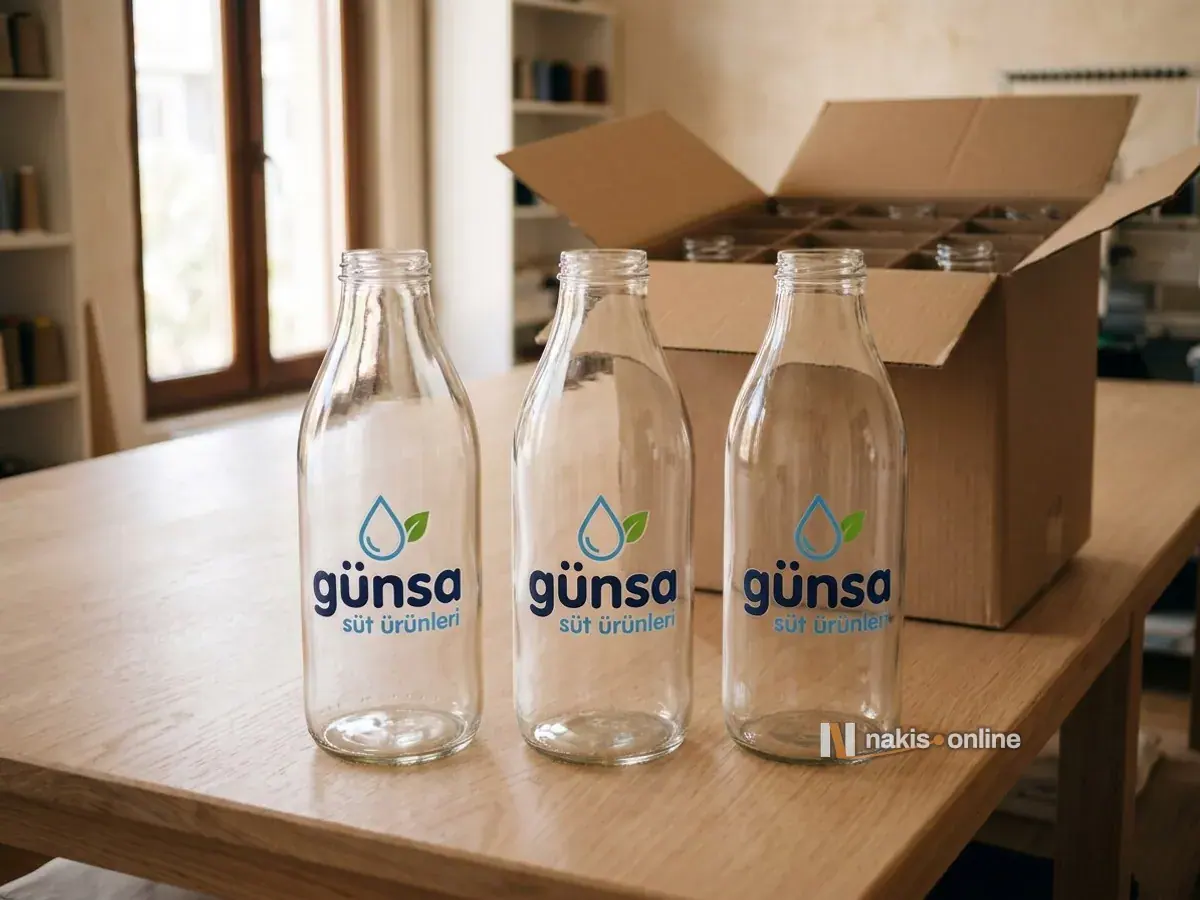
UV DTF stickers are used on mugs, flasks and pens, on glass such as bottles, jars and drinking glasses, and on metal and plastic such as water bottles, metal tins, plastic containers and phone cases. What they have in common is a hard, smooth, clean surface: the sticker holds on a flat or gently curved body, not on a flexible or porous base. The exact position and size are settled in the quote, once we have seen the product:
| Surface | Examples | What to keep in mind |
|---|---|---|
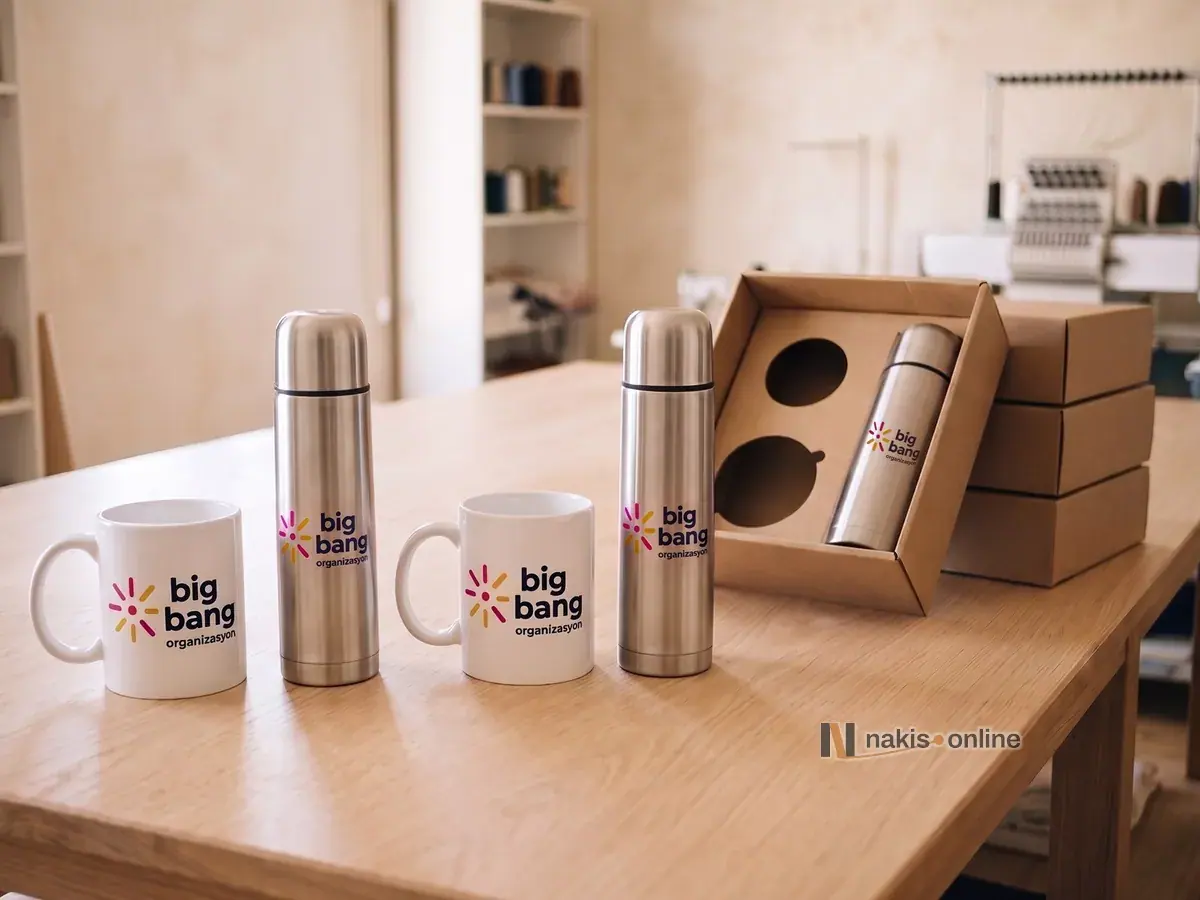
| Mugs and flasks | Ceramic mugs, steel flasks and tumblers | The handle, the lid and the base line decide the area the sticker can fit |
| Pens | Plastic or metal pens | On a narrow barrel, the sticker is kept small relative to its circumference |
| Glass | Bottles, jars, drinking glasses | On clear glass, how the sticker looks from behind is settled in the quote |
| Metal and plastic | Water bottles, metal tins, plastic containers, phone cases | It holds on a hard case; on silicone and flexible cases the edges lift |
Sticker only, applied, or supplied with the product?
We deliver UV DTF stickers in three ways: as stickers only (you apply them yourself), applied to the products you send us, or already applied to mugs, flasks, pens and similar products that we source. Which one fits depends on who holds the products and who will apply the stickers. When we source the product, the model, colour and sourcing time are chosen together in the quote:
| How you order | What you send us | When it fits |
|---|---|---|
| Stickers only | The design, the size and the quantity | You have the products and will apply the stickers yourself |
| Applied to your products | The design and the products to be labelled | The products are ready and you want them labelled in the workshop |
| Product and sticker from us | The design, the product type and the quantity | You also want us to find the mugs, flasks or pens |
Logo mugs, flasks and bottles: UV DTF in promotional sets
A logo mug, flask or water bottle can be part of a promotional set: a flask tucked into a tote bag at a trade-fair stand, a mug given with a pen at the new year, a glass bottle on the tables at an office opening. UV DTF puts the logo on these products with no paper margin, and the same design can be used on each surface with its size adjusted.
We can plan the whole set in one quote: we prepare the mugs, flasks or pens with their stickers, and embroider or print the logo on the textile pieces. For those, see custom tote bags and custom embroidered caps.
How large can a UV DTF sticker be?
We make a single UV DTF sticker up to A3 size (29.7 × 42 cm); the exact size is settled in the quote, based on the design and the surface. The surface itself usually sets the size: the flat area between the handle and the body of a mug, the straight part below the lid of a flask, the circumference of a pen.
Measure the flat or gently curved part of the product with a ruler and keep the width of the sticker a little inside it. The stronger the curve, the more a wide sticker tends to bubble and lift at the edges, so a smaller sticker is the safer choice on strongly curved bodies. If you have a full UV DTF cup wrap in mind, tell us which cup: whether a wrap suits it or a smaller sticker is the better choice is settled in the quote.
What artwork works best for a UV DTF sticker?
The edge of the sticker is the edge of the design, so a vector file (AI, EPS, PDF or SVG) with a transparent background and clean lines gives the best result. If you only have a PNG or JPG, we can start from that and tell you with the quote whether it suits a sticker.
Whether a white layer goes behind the colours depends on the colour and the transparency of the surface, so say what colour the surface is and whether it is clear. On a clear glass bottle, the sticker can also be seen from behind, so how the design reads from both sides needs discussing at the start.
How do you apply a UV DTF sticker?
If you order stickers only, you apply them by hand: no press, iron or oven is needed. The guides published by UV DTF film brands agree on this order:
- Wipe the surface with isopropyl alcohol and let it dry completely; grease and dust left on the surface weaken the bond.
- Slowly lift the lower A film; the design stays on the upper B film together with its adhesive.
- Place the sticker from the middle outwards, and press it with a card from the centre to the edges to push out the air.
- Peel the B film slowly, close to the surface and at a low angle; if a corner of the design lifts with the film, press it back and continue from another angle.
What decides the price of UV DTF stickers?
The price depends on the size of the sticker, the quantity and how you order: stickers only, stickers applied to your products, and stickers with the product are separate items in the quote. If we source the product, the product itself is part of the quote too.
We don’t publish a fixed price list; tell us the design, the surface, the size and the quantity, and you get the price in a written quote. The minimum order for UV DTF stickers is 10 pieces; they are ready on average 3–5 days after you approve the order, and if we also source the mugs or flasks, the time needed to obtain them is added.
Questions about UV DTF stickers
Can a UV DTF sticker go on a T-shirt or other fabric?
No. A UV DTF sticker is made for hard, smooth surfaces; it does not hold reliably on stretchy, washed fabric, and the guides of UV DTF film brands advise against using it on clothing. For a colour logo on T-shirts, sweatshirts or bags, DTF printing is the right method.
Can a UV DTF sticker go on clear glass?
Yes; glass is one of the surfaces it holds on. On a clear surface the sticker is also seen from behind, so how the design reads from both sides matters: with a white layer behind the colours, the sticker looks white from behind, and to look coloured from both sides, colour is printed on both sides of the white layer. Which arrangement is used is settled in the quote, based on your design.
Does a UV DTF sticker stick to a silicone phone case?
We don’t recommend it. Silicone has a low surface energy, and a flexible case bends in use, so the edges of the sticker lift. On a hard plastic or metal case the sticker holds on the flat surface; if you are unsure what your case is made of, add the product details to your request.
Can you supply the mugs or flasks as well?
Yes. We can source products such as mugs, flasks and pens and deliver them with the stickers applied; the model, colour and sourcing time are chosen together in the quote. If you already have the products, you can send them to the workshop to be labelled, or buy the stickers only and apply them yourself.
Are cold DTF and UV DTF stickers the same thing?
For the product on this page, yes: cold DTF is one of the trade names of the UV DTF sticker. “Cold” refers to the application, which needs no heat or press, because the ink has already hardened under UV light during printing. That is also what separates it from DTF printing on fabric, which is applied with a heat press.
Quote
Send your design for UV DTF stickers
Send the design, the surface, the size and the quantity, and tell us the product type if you want it from us too. We reply in writing with the price, the timing and the shipping cost.
Working hours: Monday–Saturday 08:30–19:00 · Istanbul time (UTC+3)